

Mobile applications are essential tools in modern daily digital interaction worldwide. People depend on apps for communication, shopping, entertainment, and professional workflows. Growing usage increases expectations for performance, stability, and seamless user experience. Developers must deliver applications that function reliably across varied platforms and devices. Without quality, users quickly uninstall apps and search better-performing alternatives.
Mobile app testing software ensures applications operate correctly before public release. It identifies errors, crashes, compatibility issues, and usability weaknesses early. Testing tools simulate different devices, networks, and operating system environments efficiently. This process reduces development costs by preventing expensive post-release fixes. Thorough testing enhances user satisfaction, retention, and long-term application success.
As mobile technology evolves, testing requirements continue becoming more complex. Increasing device diversity demands reliable cross-platform testing strategies worldwide today. Organizations prioritize testing to ensure competitive performance and strong user loyalty. Advanced automation and AI-driven tools accelerate testing speed and accuracy. Effective mobile testing remains essential for delivering dependable digital experiences globally.
Table of Contents
Importance of Mobile App Testing

Mobile app testing ensures applications function reliably under varied real conditions. It helps developers detect issues before users encounter frustrating experiences daily. Without thorough testing, applications often crash or freeze during normal usage. Poorly tested apps quickly receive negative reviews harming long term reputation. Thorough testing supports user trust and ensures consistent reliable app performance.
Mobile device diversity increases complexity of ensuring consistent application performance worldwide. Different screen sizes require adaptive layouts working perfectly across devices today. Operating system updates often change behaviors causing unexpected functional issues too. Testing software simulates these environments to verify compatibility before release thoroughly. Comprehensive testing ensures stable performance across multiple hardware configurations in practice.
User expectations demand fast responsive applications with intuitive reliable experiences today. Testing helps ensure speed optimization reducing delays and slow interface issues. Performance testing evaluates behavior under heavy usage or poor network conditions. This testing prevents crashes during high traffic or peak application demand. Reliable performance encourages user retention and long term application success overall.
- Mobile app testing ensures reliable functionality across multiple devices and operating systems.
- Automated testing speeds development cycles and reduces repetitive manual testing tasks significantly.
Functional Testing Overview
Functional testing verifies that application features operate exactly as intended. It confirms buttons inputs workflows behave consistently across different user scenarios. Testers check navigation flows screens data responses for smooth reliable usage. Functional validation prevents defects affecting usability and overall customer satisfaction.
Regression testing ensures new updates do not break existing features unexpectedly. Automation tools execute repeated functional tests faster improving development efficiency significantly. Functional testing provides foundation for reliable stable application performance overall. Consistent results support better user satisfaction and stronger application reputation.
Key Features of Mobile App Testing Software
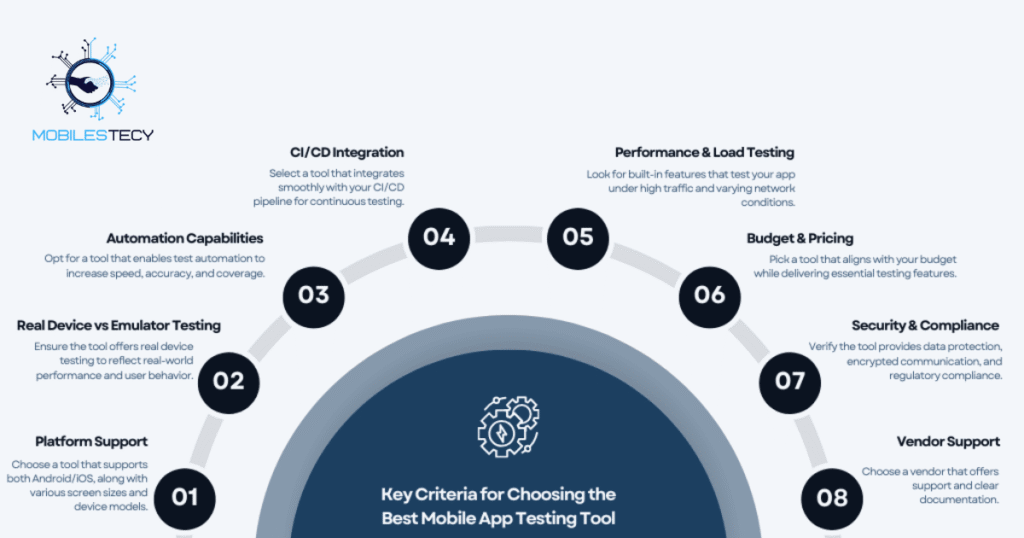
Testing software offers automation capabilities for repeating tests efficiently and accurately. Automation reduces manual effort and accelerates development testing cycles significantly today. Real device testing provides accurate insights into actual application user experience. Simulators and emulators allow testing without purchasing every available device physically. Cloud-based platforms give access to numerous device configurations instantly worldwide today.
Testing tools include analytics reports summarizing performance metrics and detected issues. Detailed logs help developers trace problems and apply necessary corrections efficiently. Visual testing features ensure proper layout across varying screen resolutions effectively. Security testing components identify vulnerabilities protecting user data privacy effectively today. Performance trackers monitor battery usage data consumption and memory behavior continuously.
Cross-platform support enables testing on Android and iOS from one environment. This reduces complexity of maintaining separate testing strategies per platform effectively. Unified testing improves collaboration among developers testers and QA teams effectively. Centralized dashboards simplify tracking results and managing test iterations efficiently daily. Integration with development pipelines supports continuous testing and deployment workflows effectively.
- Performance testing identifies slowdowns, memory leaks, and battery consumption inefficiencies effectively.
- Security testing protects sensitive user data from breaches and unauthorized access attempts.
Performance Testing Strategies
Performance testing evaluates app behavior under various load and stress conditions. It identifies slow responses memory leaks battery drain and network inefficiencies. Testing software simulates heavy usage to predict stability during real-world traffic. Results help developers optimize code for smoother faster user experiences.
Stress testing pushes applications beyond limits to reveal breaking points clearly. Load testing measures performance when many users access app simultaneously. Performance data guides improvements for scalability and long-term reliability. Optimized performance contributes to higher retention and positive user reviews.
Benefits of Automated Mobile App Testing
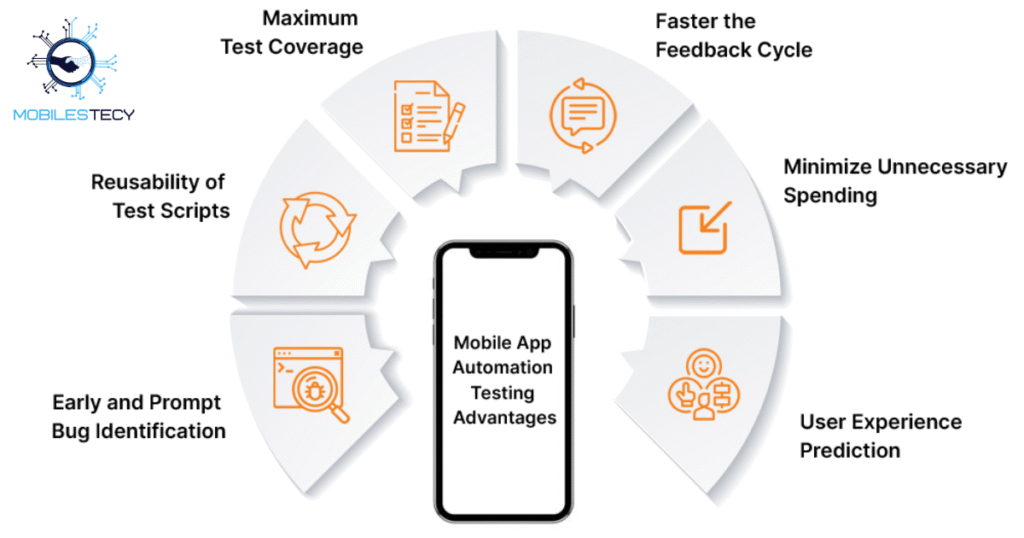
Automation reduces repetitive manual testing effort saving significant developer time daily. Faster testing allows quicker release cycles improving market responsiveness significantly today. Automated scripts ensure consistency and accuracy during repeated testing processes reliably. Automation identifies defects early preventing expensive post-release corrections in development stages. Improved efficiency leads to enhanced product quality and user satisfaction overall.
Automated testing supports continuous integration workflows improving deployment reliability significantly today. It helps teams release updates frequently without compromising application stability overall. Automation reduces dependency on large manual testing teams lowering operational costs. Scalable automation frameworks accommodate increasing application complexity easily across many releases. Efficiency gains allow teams to focus on innovative feature development instead.
Automated testing improves application reliability under diverse usage conditions worldwide today. High test coverage reduces missed defects and improves overall stability significantly. Automation supports performance testing under heavy load ensuring responsiveness consistently always. Reliable performance builds user trust and long-term application loyalty across communities. Automation remains essential for delivering competitive high-quality mobile applications globally today.
- Compatibility testing ensures smooth operation on different screen sizes and hardware configurations.
- Usability testing improves navigation flow, visual design clarity, and overall user experience.
Security Testing Importance
Security testing protects user data from unauthorized access and malicious threats. It identifies vulnerabilities that attackers may exploit in application systems. Testing includes encryption validation secure login and safe data handling. Security measures build trust especially for financial healthcare and communication applications.
Penetration testing simulates real attacks to uncover security weaknesses effectively. Regular security assessments maintain compliance with industry regulations and standards. Secure applications reduce risks protect brand reputation and ensure user loyalty. Ongoing security testing remains necessary due to evolving cyber threats globally.
- Cloud-based testing platforms provide scalable access to real devices worldwide today.
- Continuous testing supports faster release cycles and better integration with DevOps workflows.
- Error logging tools help developers analyze defects and diagnose issues efficiently.
- Functional testing validates input handling, navigation paths, and feature behavior accuracy.
- Comprehensive testing increases user satisfaction, retention rates, and long-term application success.
Faq’s
What is mobile app testing software and why is it needed?
It ensures applications function correctly across devices, systems, and usage conditions.
Does mobile app testing improve user satisfaction and application reliability?
Yes, testing reduces crashes, enhances speed, and ensures smoother user interactions.
What types of testing are commonly performed on mobile applications?
Common types include functional, performance, usability, compatibility, and security testing.
How does automation support faster mobile app development and release cycles?
Automation reduces manual effort and accelerates repeated testing tasks consistently. It ensures accuracy and improves overall application quality before deployment.
Why is security testing important for modern mobile applications today?
It protects sensitive data and prevents unauthorized access or malicious attacks.
Conclusion
Mobile app testing software ensures high-quality applications reach users reliably. It identifies bugs performance issues and compatibility problems before release. Thorough testing improves user satisfaction retention and brand reputation long-term. Testing supports stable functionality across varied devices networks and environments globally. Reliable apps build trust encouraging loyalty positive reviews and ongoing engagement.
Increasing mobile device diversity demands strong testing strategies ensuring consistent performance. Testing software simulates multiple usage scenarios preventing unexpected failures effectively. Automation accelerates testing cycles reducing manual effort and development time. Integrated testing improves collaboration among developers testers and quality teams. Comprehensive testing leads to smoother launches and fewer post-release fixes.
Mobile app testing remains essential for successful competitive digital product outcomes. As technology advances testing tools evolve supporting better accuracy and speed. Organizations prioritizing testing deliver reliable secure and user-friendly applications today successfully. Effective testing strengthens trust and promotes long-term customer engagement worldwide. Continued investment in testing ensures sustained performance and future scalability.
Read more latest Articles on Mobilestecy.com